
Early morning sneezing: How to tackle it without depending on medicines
Early morning sneezing: How to tackle it without depending on medicines
Morning sneezing can feel frustrating — especially when it becomes a daily routine. The good news? Most of the time, it has simple causes and even simpler solutions. Let’s understand why it happens and how you can reduce it naturally.
2 min read | Posted on 02 December 2025
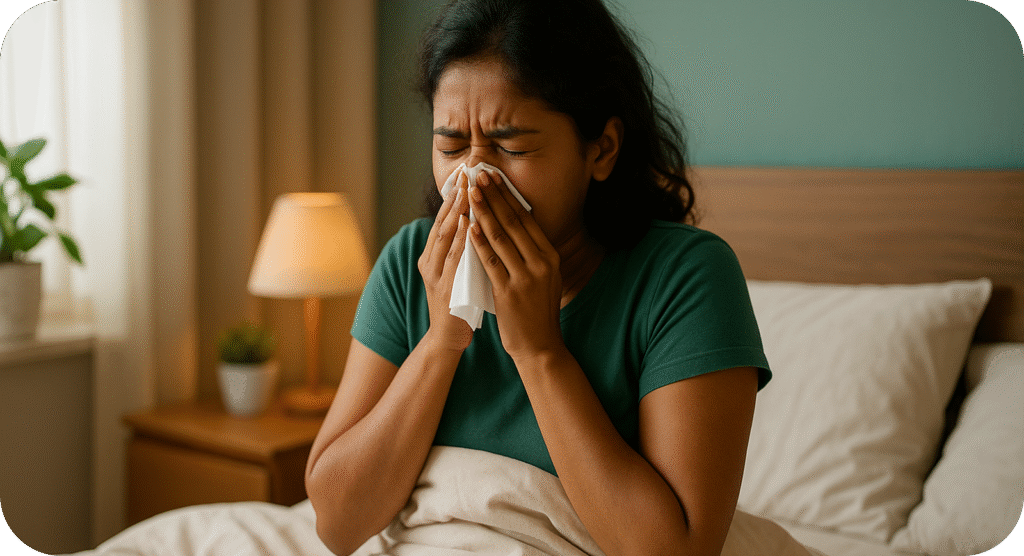
🧩 Why does sneezing happen more in the morning?
Your bedroom collects the highest amount of indoor allergens. At night, your body rests — but allergens don’t.
Common triggers include:
- Dust mites on pillows, mattresses and blankets
- Temperature drop during early morning hours
- Bedroom mould or dampness
- Pet dander (if pets sleep indoors)
- Traffic dust entering through windows
When your nose meets these allergens as soon as you wake up, the result is: Sneezing, blocked nose, nose itching and a runny nose.
🛏 Step 1: Fix your bedroom environment
Morning allergy begins where you sleep. Try these simple changes:
- Use dust-mite–proof covers – Protect your pillow and mattress with anti-allergy covers.
- Wash bedding weekly – Use hot water (60°C) to kill dust mites.
- Reduce bedroom humidity – Use good ventilation or a dehumidifier if the room feels damp.
- Keep windows closed early morning – Especially in cities or during pollen-heavy seasons.
- Avoid carpets and heavy curtains – They trap dust and release them when disturbed.
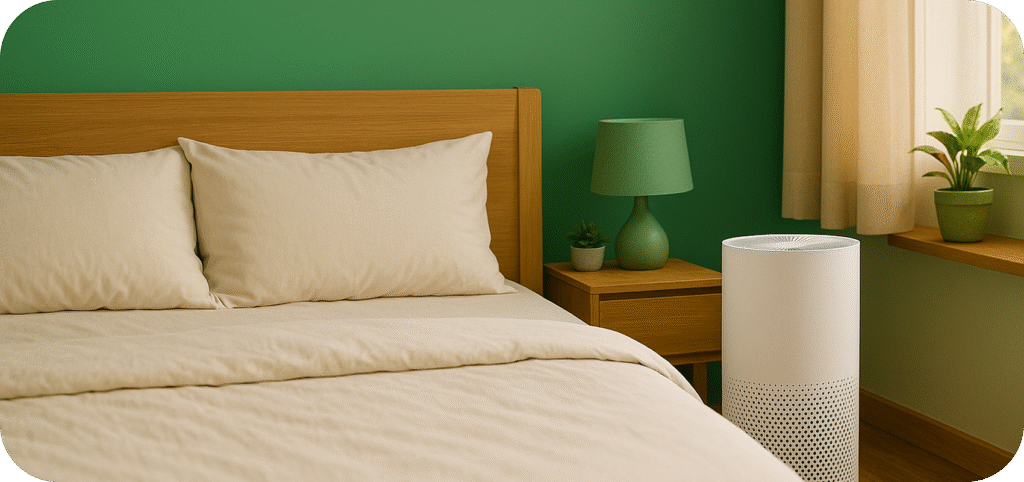
🌬 Step 2: Improve air quality
Small improvements can make big differences.
- Use an air purifier (especially at night) – HEPA filters reduce dust, pollen and pet dander.
- Clean fan blades and AC filters – AC filters gather dust quickly. Clean once every 2–3 weeks.
- Avoid room fresheners and incense – They irritate the nose and worsen morning sneezing.
🐶 Step 3: Manage pet-related triggers
If your pet sleeps in your bedroom:
- Move pet bedding outside the room
- Bathe pets regularly
- Keep grooming and brushing outdoors
Pets carry pollen and dust on their fur, even if you keep your room spotless.
❄️ Step 4: Watch the temperature difference
Early mornings are cooler. A sudden temperature change irritates the nose.
Try this:
- Don’t sleep directly under a fan
- Keep AC at a steady temperature
- Use a light blanket to avoid cold exposure
🥛 Step 5: Notice food or nighttime habits
Some foods can increase mucus production and worsen morning sneezing:
- Cold milk at night
- Curd late evening
- Ice creams
- Very spicy foods
Try avoiding them for a few days and observe if mornings improve.
🔍 Step 6: Identify the real trigger (most important)
Lifestyle changes help — but the root cause must be addressed. If morning sneezing continues for:
- More than 2 weeks
- Every day
- Along with blocked nose or eye itching
It may be allergic rhinitis.
The only accurate way to know your triggers is through:
- Skin prick test
- Specific IgE blood test
Once you know the allergen, your treatment becomes precise and long-lasting.

🌱 Non-medication methods that actually help
- Saline nasal rinse – Flushes out allergens from the nose.
- Steam inhalation – Reduces congestion and irritation.
- Keeping rooms dust-free – Daily light cleaning, especially surfaces near the bed.
- Regular sunlight exposure – Helps reduce mould and dampness.
💡 When do you need to see a specialist?
If you experience:
- Sneezing every morning
- Nose itching or blocked nose
- Headache or heaviness
- Disturbed sleep
- Symptoms worsening during weather changes
A specialist can help diagnose the exact cause and guide an effective plan that reduces dependency on medicines.